Introduction
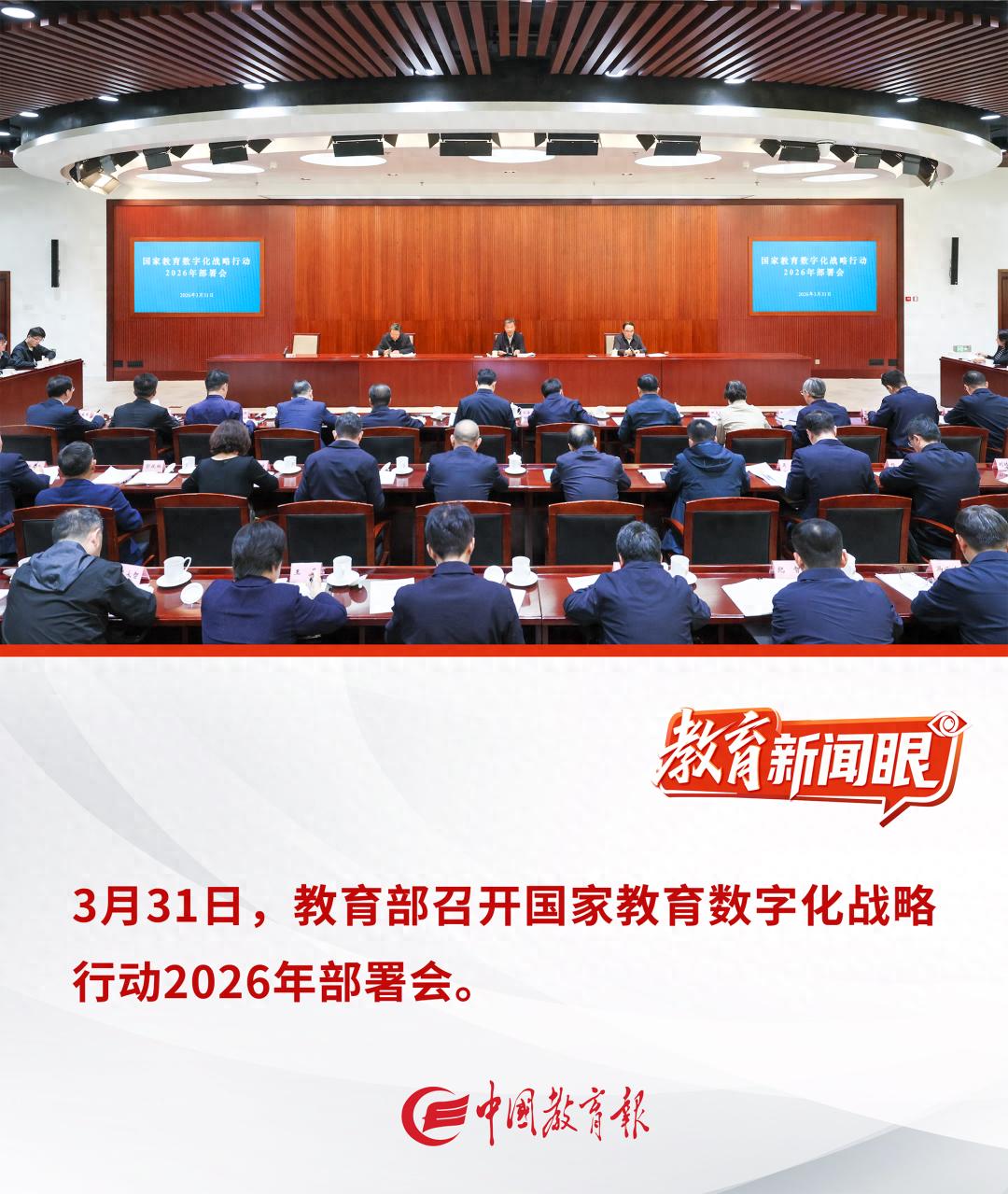
On March 31, marking the fourth anniversary of the National Smart Education Public Service Platform, the Ministry of Education held a meeting to deploy key tasks for the 14th Five-Year Plan period.
Last year, the State Council issued opinions on the deep implementation of the “Artificial Intelligence +” initiative, promoting the deep integration of AI across various sectors. The Ministry of Education, along with nine other departments, outlined a chapter on “comprehensively advancing intelligence to promote educational reform” in their opinions on accelerating educational digitalization. Following the recent National People’s Congress, the term “Artificial Intelligence + Education” became a focal point of this deployment meeting, signaling a concrete action plan.
Achievements in Educational Digitalization
The effects of educational digitalization may seem “virtual,” yet they are tangible.
During the meeting, local schools and universities shared their experiences using the National Smart Education Platform, showcasing impressive outcomes.
- In Zhejiang, the remote Shengsi Middle School partnered with Hangzhou Xuejun Middle School, steadily improving teaching quality. Over 340 provincial-level master teacher network studios have nurtured more than 5,900 subject leaders. According to Chen Chunlei, Secretary of the Education Department of Zhejiang Province, they have established 83 counties for universal preschool education and 69 counties for quality balanced development in compulsory education.
- Tongji University’s “One Network for Learning” smart learning platform clearly displays a knowledge graph covering 12 subject clusters; AI agents create immersive future classrooms for teachers and students. Zheng Qinghua, the school’s Party Secretary, stated that the school is implementing a comprehensive AI literacy enhancement project, making understanding and using AI a common goal.
- Guangxi Minzu Normal University’s affiliated third primary school took advantage of the comprehensive application of the National Smart Education Platform, transforming its educational approach. Principal Huang Pinghua noted that by utilizing the platform’s intelligent test generation function for customized exercises, teachers conducted one-on-one tutoring based on data analysis, resulting in a significant increase in the correct rate of decimal operations from 62% to 94% in just one semester.
These three approaches reflect solid footprints of the national educational digitalization strategy during the 14th Five-Year Plan period.
Beyond the meeting venue, educational digitalization is transforming the educational ecology in more regions. In Hainan, over 1,000 rural schools are now offering English, science, music, and other courses through the National Smart Education Platform. In Shanghai, educational data has been integrated into the city’s “One Network for All Services” platform, reducing the number of trips parents need to make.
Minister of Education Huai Jinpeng described the breadth, depth, and effectiveness of the national educational digitalization strategy as “unprecedented.” The implementation of five key tasks highlights the supportive role of educational digitalization in building a strong educational nation:
- Supporting the fundamental task of moral education by establishing a resource library for “big ideological and political courses” and integrating mental health models.
- Supporting the integrated development of educational technology talent by implementing AI-enabled educational actions and providing over a thousand micro-specialties and vocational training courses.
- Supporting improvements in the quality of public educational services by creating a digital learning space covering over 180 million learners and integrating 51 government services, serving a total of 140 million people.
- Supporting the professional growth of teachers through AI-specific training, forming 500,000 teacher research groups, and creating intelligent teaching partners.
- Supporting the establishment of a globally influential educational center by launching an international version of the platform, covering over 120 countries and regions, and releasing the world’s first white paper on smart education.
Notably, the three experiences shared at the meeting encompass local, higher education, and basic education, covering both urban and rural areas, aimed at showcasing the diverse applications of educational digitalization and providing references for schools nationwide.
“Many schools have made effective and creative applications, which are valuable experiences in promoting educational digitalization in our country. Everyone should learn carefully, borrow from each other, innovate in application, and deepen their summaries,” emphasized Huai Jinpeng.
Future Directions for Educational Digitalization
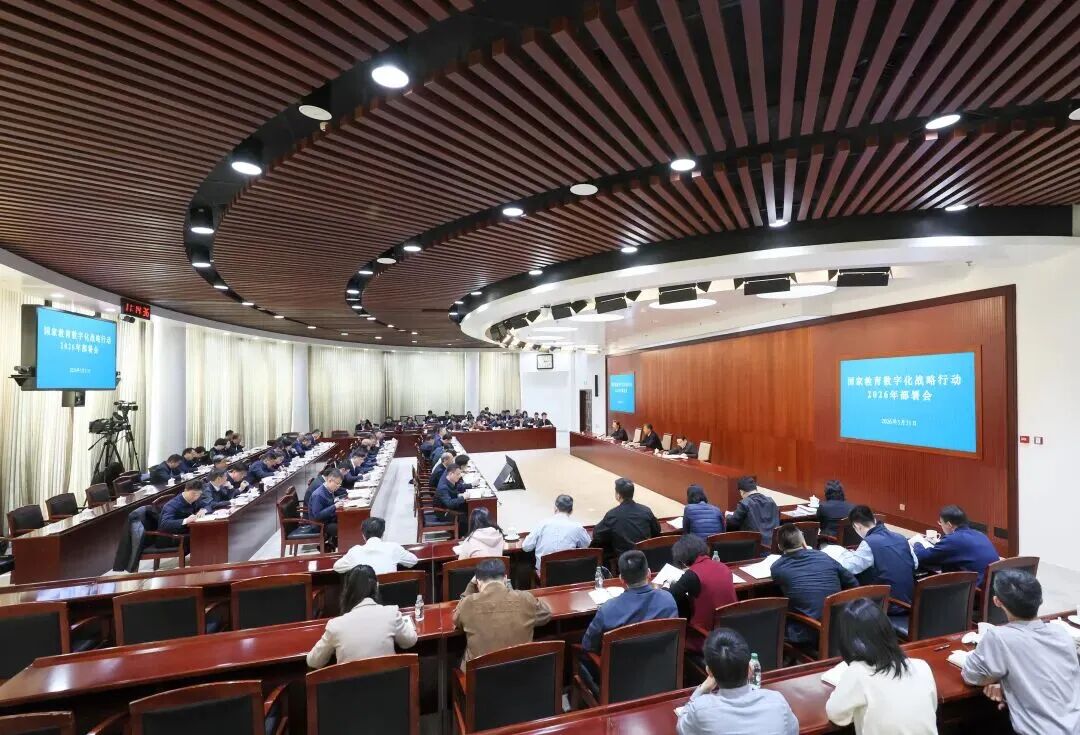
The year 2026 marks the beginning of the 15th Five-Year Plan and is a critical year for the educational digitalization strategy to enter its 2.0 phase. Given the dramatic changes in the internal and external educational environment, a series of urgent questions need to be addressed:
- As the speed of technological advancement accelerates, how can education keep pace with these changes and return to the essence of nurturing?
- How can we guide the new generation of digital natives to recognize and take on their responsibilities towards the country and the nation?
- With profound impacts from demographic changes, how can we effectively promote high-quality population development?
- In the face of increasing international competition, how can we provide a substantial reserve of strategic talent and technological innovation to strengthen our nation’s foundation?
To address these challenges, the meeting outlined a systematic approach with “four key understandings”:
- Understand the systemic impact of AI on reshaping the underlying logic and patterns of education, planning future educational and talent capability maps to create learning scenarios that genuinely engage students’ interests and curiosity.
- Understand the urgent demand for AI in cultivating innovative talents and supplying technological innovations in education, widely exploring innovative practices and integration models for AI-enabled educational technology talent.
- Understand the new opportunities AI presents for promoting high-quality population development in education, expanding the supply of quality educational resources, and promoting comprehensive human development.
- Understand the new issues AI raises regarding guiding students’ values and preventing ethical challenges, ensuring that value shaping is integrated throughout the AI-enabled educational process while being more attentive to students’ physical and mental health.
Inside the venue, representatives shared positive outcomes from grassroots explorations. For instance, Tongji University has implemented AI-enabled evaluation reforms to strengthen the evaluation of thesis and practical achievements, developing a digital “Dandelion Field” system that mines over 88,000 academic relationships from internal data, breaking through traditional evaluation models dominated by scores and credits.
In another example, Guangxi Minzu Normal University’s affiliated third primary school analyzed each student’s height, weight, and physical fitness data to generate personalized exercise plans. They adapted videos from the National Smart Education Platform, including rhythmic gymnastics and ethnic fitness exercises, to create suitable content for border children, resulting in an increase in participation in physical activities from 23% to 87% and a 40 percentage point improvement in fitness standards within a single semester.
As the educational digitalization strategy 2.0 progresses, it is expected that practices will become richer, forming new landscapes and ecologies for building a strong educational nation.
Leveraging AI in Education
“Educational digitalization must have concepts, plans, and actions,” the meeting emphasized.
Looking towards the 15th Five-Year Plan, how can education effectively utilize AI as a key variable? The meeting outlined a clear path that includes “six empowerments” and “six centers”:
- AI for school education, focusing on improving school education centers;
- AI for lifelong education, emphasizing the creation of lifelong learning centers;
- AI for technological innovation, establishing high-level technological innovation centers;
- AI for international exchange, carefully designing Chinese language education centers;
- AI for teacher development, iterating and upgrading teacher centers;
- AI for educational governance, enhancing and expanding educational governance centers.
It is evident that the Ministry of Education is fully promoting the deep integration of AI into all elements, processes, and scenarios of education.
In fact, the newly launched lifelong learning center, technological innovation center, and Chinese language education center on the National Smart Education Platform represent actions that translate the concept of “Artificial Intelligence + Education” into reality, expanding the new landscape of educational development.
For example, the lifelong learning center has added new technology learning resources, including AI, set up intelligent indexing, introduced smart guidance, and increased interactivity. The technological innovation center gathers various resources for research, management, transformation, and service in university technological innovation. The Chinese language education center integrates AI into teaching, learning, assessment, research, and service, creating a new ecosystem of smart education based on “teacher-machine-student” interactions.
Notably, the National Smart Education Platform has integrated a new “AI Zone,” establishing the “Qiwuy Learning Community,” which is considered an important battleground for “Artificial Intelligence + Education.”
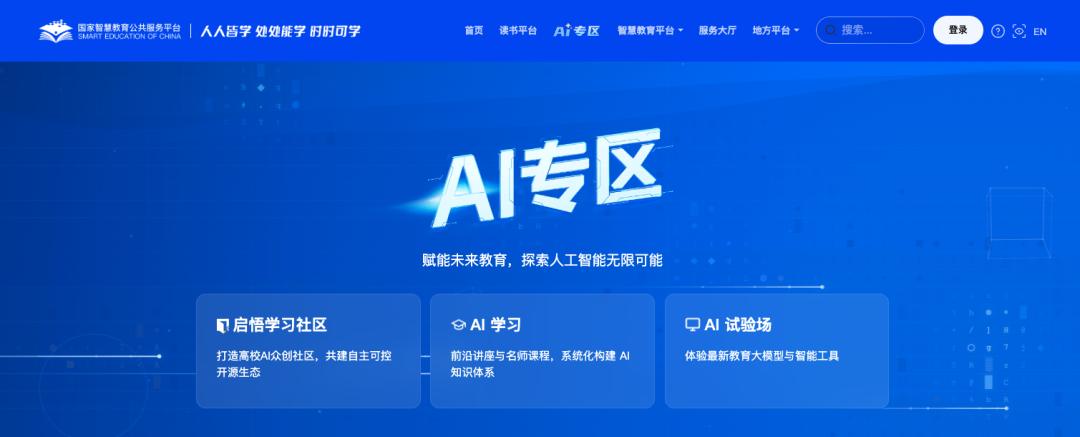
The “AI Zone” effectively gathers AI learning resources and tools, making learning and using AI accessible to everyone. The “Qiwuy Learning Community” focuses on the domestic AI open-source ecosystem, allowing students to learn the latest AI knowledge, enjoy high-cost-performance AI innovation resources, and enhance their skills by undertaking open-source tasks. Several leading AI companies provide support in courses, computing power, and projects to jointly build a domestic AI ecosystem.
During the meeting, new functions of the National Smart Education Platform were introduced, along with requirements for local implementation:
- Coordinating the advancement of three pilot reforms in educational digitalization: comprehensive application of the National Smart Education Platform, AI-enabled educational actions, and digital empowerment for building a learning society, achieving significant breakthroughs through small initiatives.
- Avoiding superficial projects and excessive pursuit of construction, while paying special attention to the challenges posed by AI in education, including safety, ethics, and mental health, ensuring a balance between development and security.
With clear ideas, strong measures, and solid guarantees, “Artificial Intelligence + Education” is gradually entering a new phase.
Comments
Discussion is powered by Giscus (GitHub Discussions). Add
repo,repoID,category, andcategoryIDunder[params.comments.giscus]inhugo.tomlusing the values from the Giscus setup tool.